Silage Testing

Silage Testing

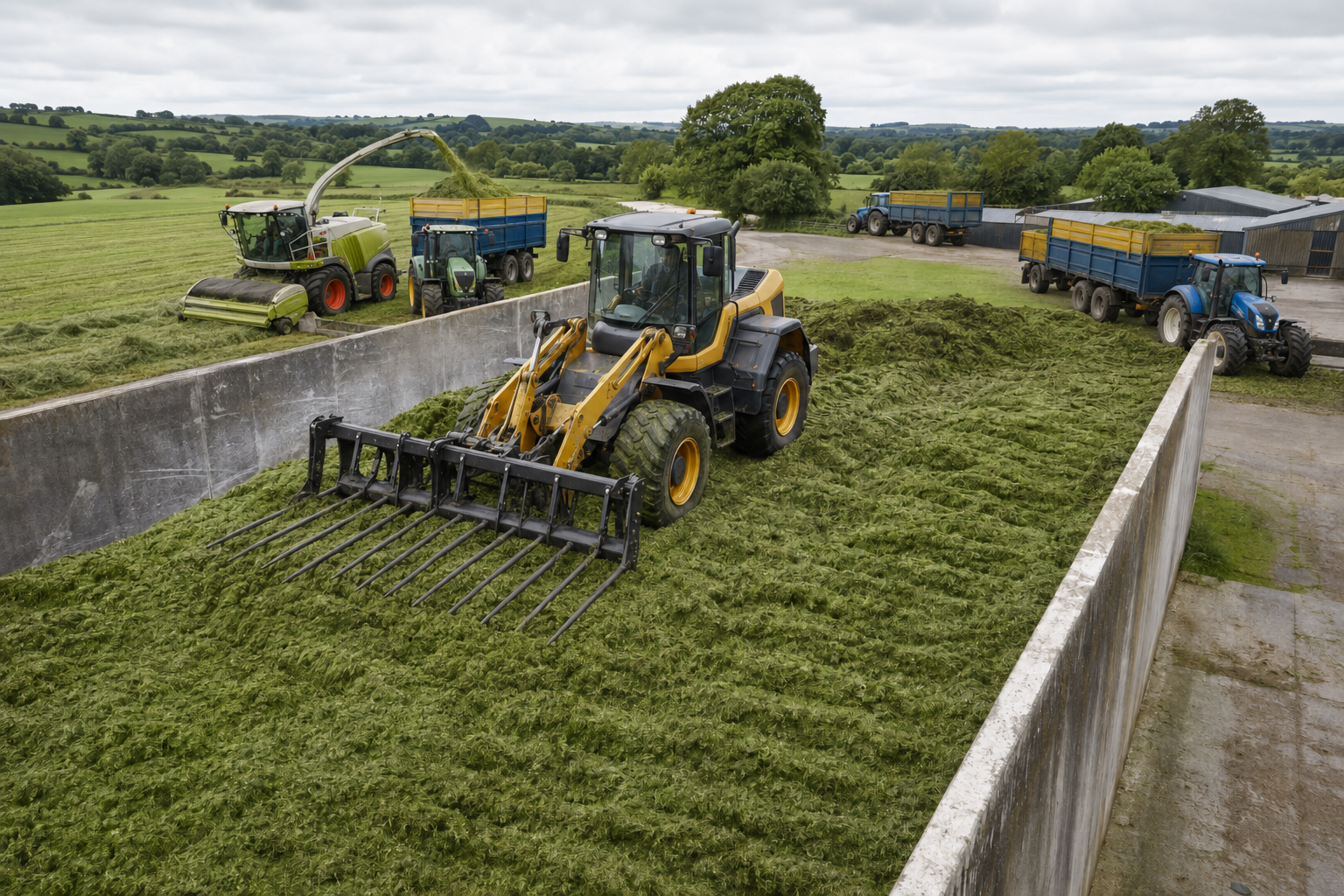
Silage testing helps farmers understand forage quality and supplement animals with the appropriate rate of concentrates to meet dietary requirements and performance targets.

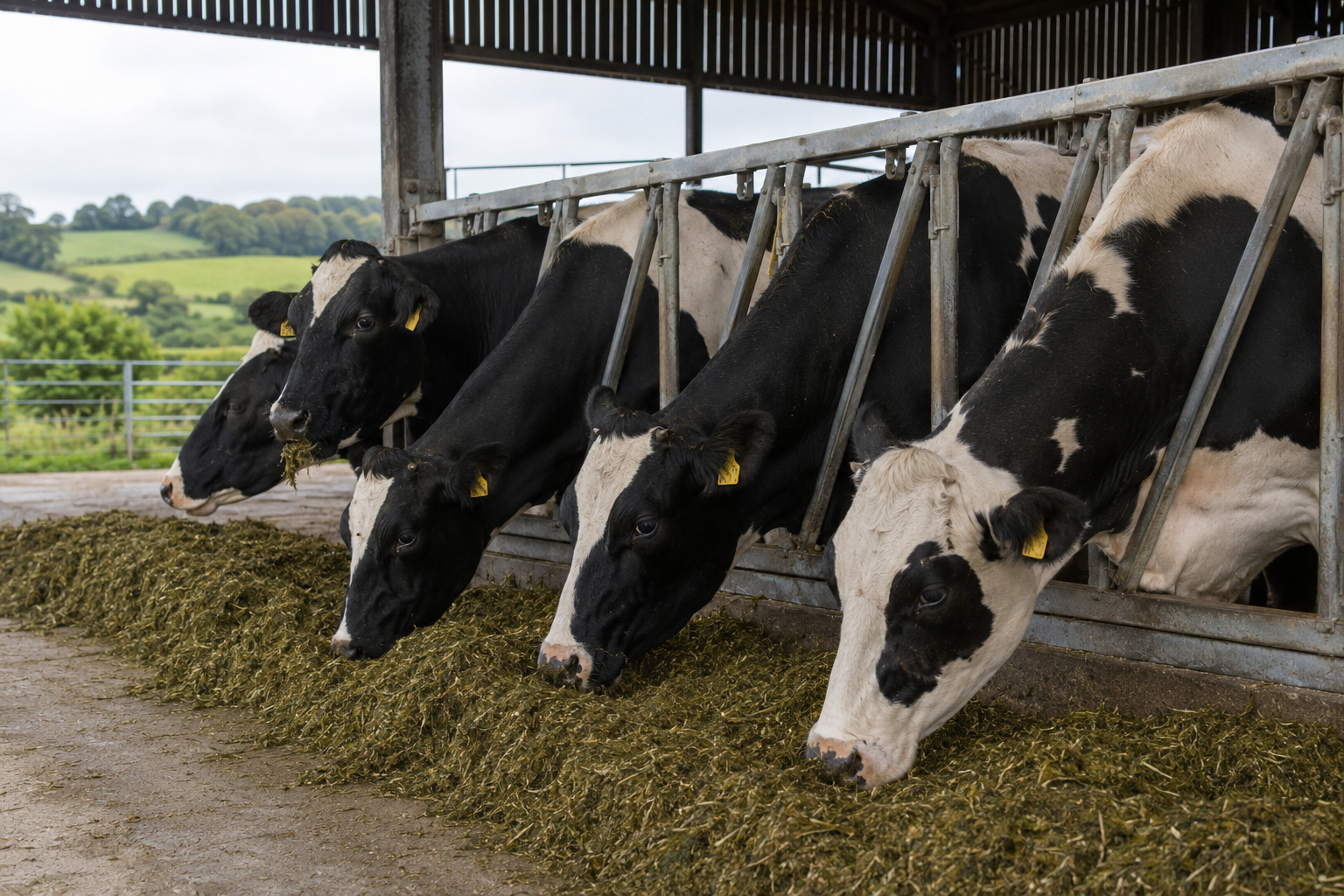
Better silage quality supports better animal performance.

Silage testing allows the farmer to supplement animals with the appropriate rate of concentrates.

Allows for decisions to made on achieving dietary requirements depending on the stock type to be fed.

Planning for future production is enhanced by the current results.

It is important to do silage testing so that you know the quality of your current fodder and you can plan for improvements if required going forward.

  • Just collect samples and send them on to FBA Laboratories
  • Select silage from the different batches you want to test with the target stock requirements in mind
  • See the section on Sampling to be sure you follow the correct process

Available Silage Analysis Services

Mineral Analysis

Silage Mineral

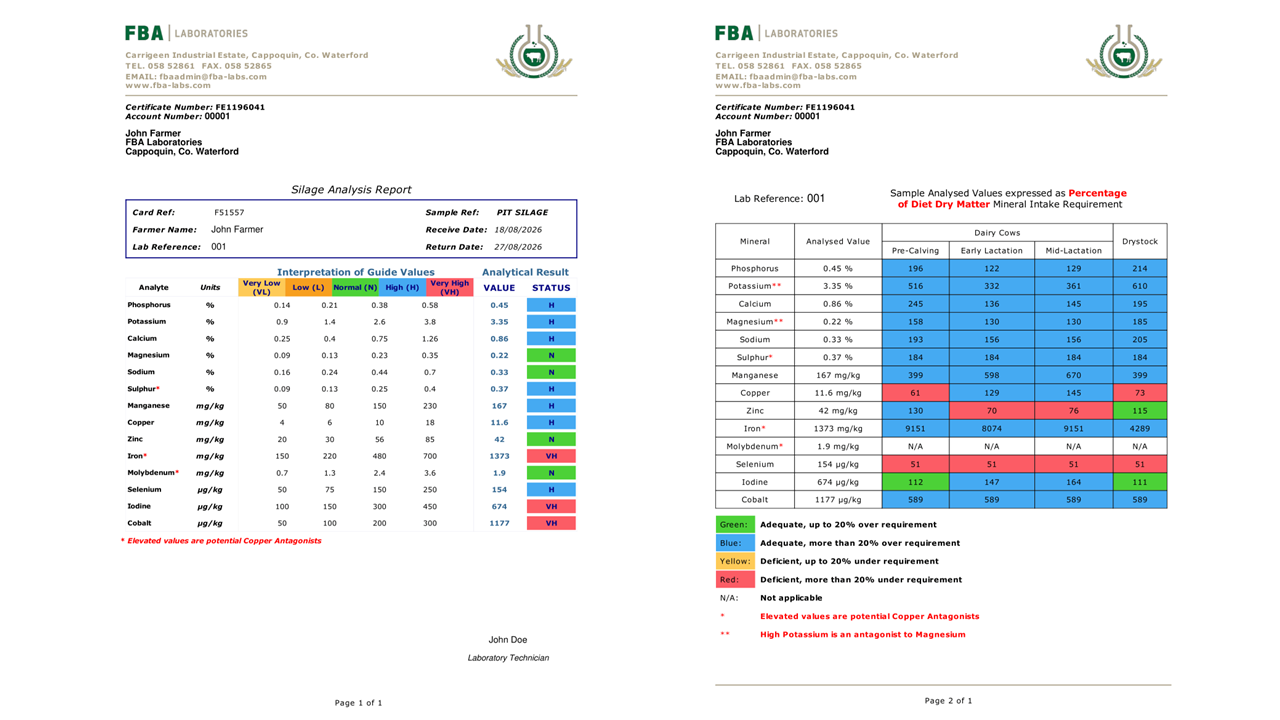
This is an ICP-MS test including elements calcium, potassium, phosphorous, magnesium, sodium, iodine, sulphur, iron, zinc, manganese, selenium, molybdenum, cobalt and copper with result status band displayed.
Maize Analysis

Silage Maize

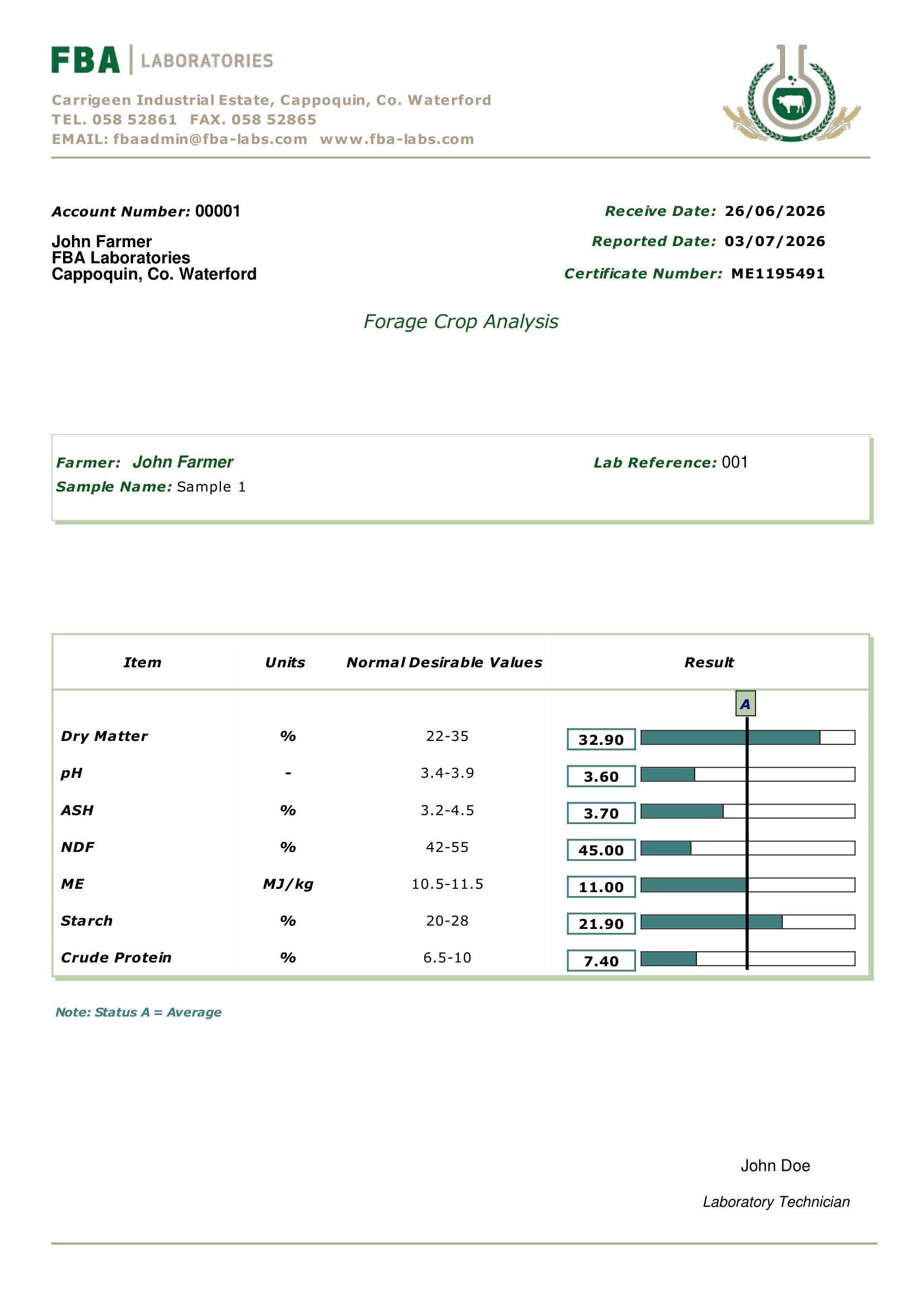
Provides results including dry matter, pH, ash, NDF, ME, starch and crude protein, with comparisons to average values.

Feed Evaluation

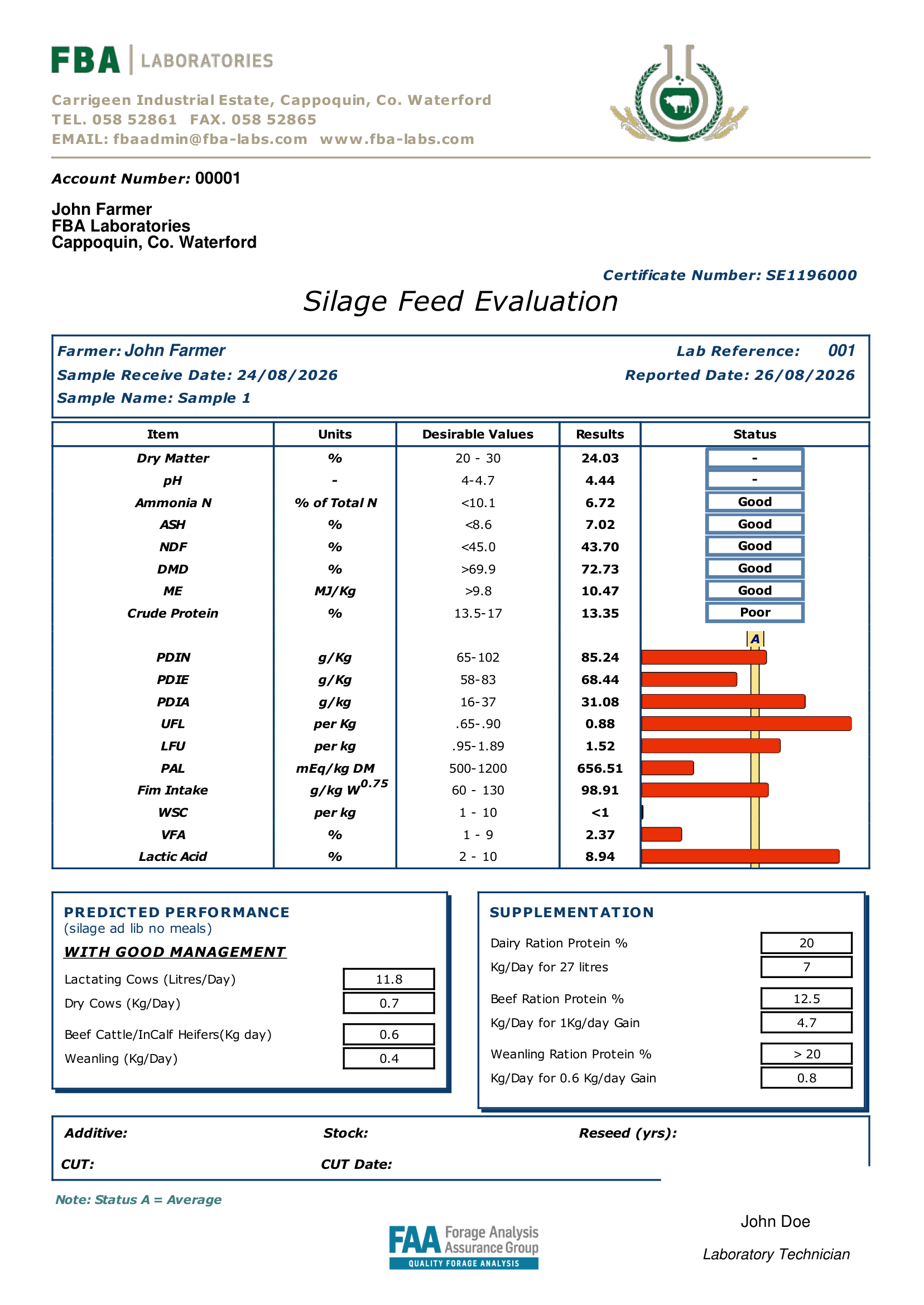
Silage Feed Evaluation

Feed evaluation helps farmers understand silage quality and feeding value so they can make better nutrition and supplementation decisions.

Submitting Silage Samples

01

Select the Batches

Select silage from the different batches you want to test, keeping the target stock requirements in mind.

02

Follow the Sampling Process

See the sampling guidance to make sure you follow the correct silage sampling procedure.

03

Send Samples to FBA

Collect the samples and send them on to FBA Laboratories for professional silage analysis.

Silage Sampling Advice

Silage Sampling Advice

01

Sample After Harvesting

Take samples about 6 weeks after harvesting.
02

Send Quickly

Try to ensure minimum time to the lab after taking the samples.
03

Use A Core Sampler

Using a core sampler, take samples from up to five well-spaced points on various areas of the surface of the silage pit.
04

Prepare A Composite Sample

Discard the surface part of each core before mixing into a composite sample of around 500g.
05

Reseal Bales

Be sure to reseal holes in bales after sampling to avoid damage.
06

Pack And Post

Put the sample into a zip-tie plastic bag, exclude air, seal well and post immediately.

Ready to submit your silage samples?