Soil Testing

Soil Testing

Soil testing is an important management tool to identify the nutrient status of the soil and determine the correct fertiliser requirements for optimum crop production and environmental sustainability.

Better decisions start with better soil insight.

FBA Laboratories provides a comprehensive range of soil analyses to help farmers, agronomists and advisors monitor nutrient levels, optimise fertiliser use and improve long‑term soil management.

  • Know the current health of the farm’s soil and how to improve it
  • Make efficient use of fertiliser
  • Limit soil degradation from incorrect or over-fertilisation
  • Improve crop performance and nutrient management
  • Help meet environmental and regulatory requirements

Available Soil Analysis Services

SR2 - pH, P, K, Lime requirement
Soil Analysis

SR2 - pH, P, K, Lime requirement

Basic soil test with guidance on crop utilisation based on results. Is a set of various chemical processes that determine the amount of available plant nutrients in the soil.

SR3 - pH, P, K, Lime requirement + Minerals
Expanded Analysis

SR3 - pH, P, K, Lime requirement + Minerals

Full soil testing for pH, phosphorus, potassium, magnesium, calcium, copper, manganese, zinc, boron. Test report includes results analysis and usage guidance for standard crops. Organic matter can be added to the test upon request.

Heavy Metals - Cu, Zn, Cd, Pb, Ni, Cr, Hg
Specialist Analysis

Heavy Metals - Cu, Zn, Cd, Pb, Ni, Cr, Hg

Tests for the presence of harmful metals in soils and can help inform safer growing practices that limit contact with soils with high levels of metals.

OM - Organic Matter
Soil Health

OM - Organic Matter

Helps to evaluate soil fertility and overall soil health.

Research Analysis

TC, TN - Total Carbon and and Total Nitrogen

Total Carbon, Total Organic Carbon, Total Nitrogen, and Carbon : Nitrogen Ratio.

Soil Texture

Soil Texture

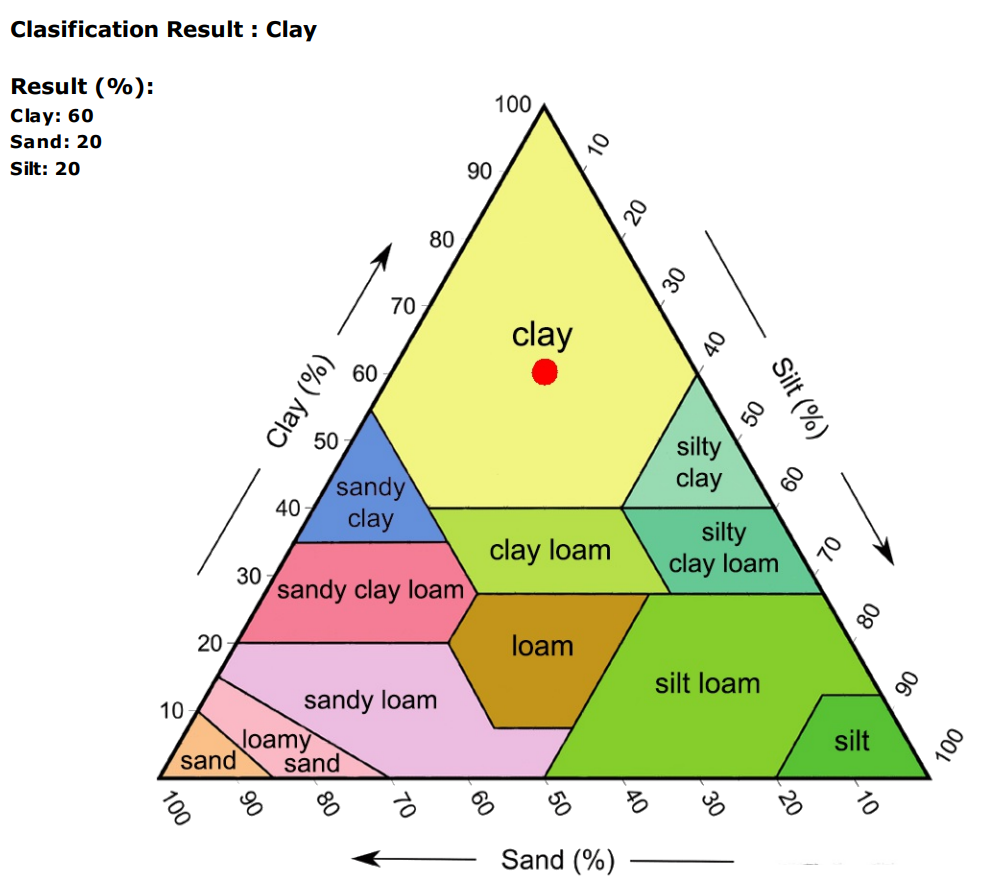
Soil texture (such as loam, sandy loam or clay) refers to the proportion of sand, silt and clay sized particles that make up the mineral fraction of the soil.

For example, light soil refers to a soil high in sand relative to clay, while heavy soils are made up largely of clay.

Texture is important because it influences the amount of water the soil can hold, the rate of water movement through the soil, and how workable and fertile the soil is.

Submitting Soil Samples

01

Select the Paddocks

Select the paddocks or fields you want to check before beginning the soil sampling process.

02

Follow the Sampling Process

See the section on Sampling to ensure you follow the correct soil sampling procedure.

03

Send Samples to FBA

Collect the samples and send them on to FBA Laboratories for professional soil analysis.

Sampling Advice

Sampling Advice

Watch Sampling Video
01

Use clean equipment

Using clean, uncontaminated utensils take a soil sample from a number of areas in a paddock, to a depth of 100 mm (4”) excluding any non-soil material.
02

Follow a consistent path

It is advisable to follow a predefined path to ensure future samples are taken from roughly the same areas for comparison.
03

Prepare representative samples

Very large paddocks (> 20 ha) should be subdivided. Take a minimum of 20 soil cores per paddock, mix them together, and take a representative sample for testing.
04

Pack and mark samples

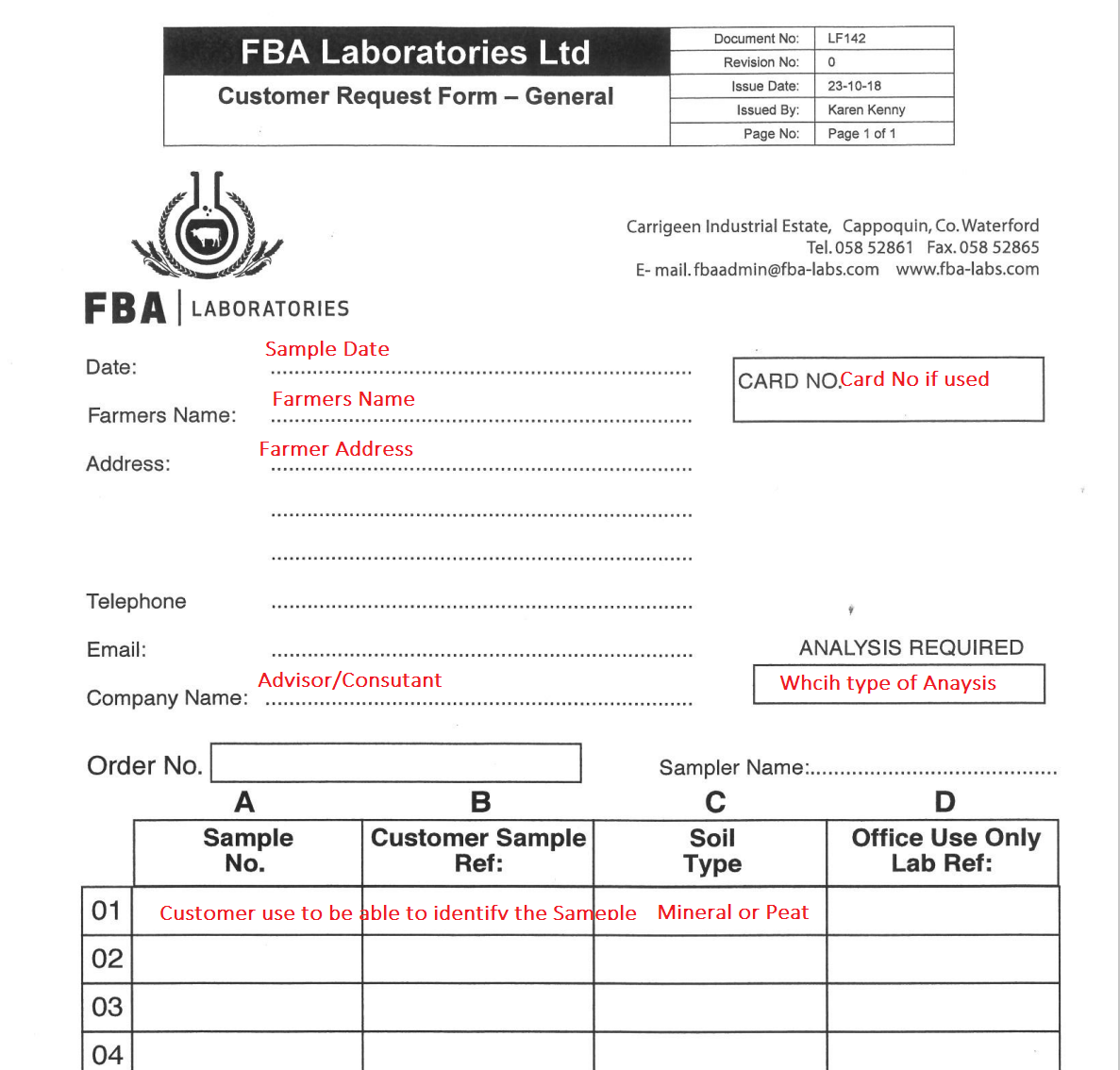
Samples should be placed in an airtight container and clearly marked with references to the farm log sheet.

Delivery

When the sampling is completed for the farm, all samples should be placed in a box with a log sheet that identifies each sample and delivered to FBA.

Certification

Once the soils are tested, a certificate with the results is sent to you by email if provided, or by regular mail where appropriate.

For more information on any of our tests, please use the Contact Us option